


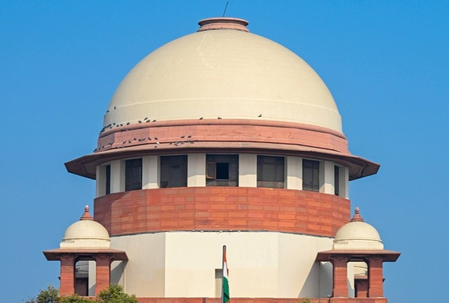
The Supreme Court declined to halt the limitations imposed by the Kerala High Court on the operations of the Kerala State Waqf Board. This decision has led the Bharatiya Janata Party (BJP) to assert that its legal challenge against the Board has been partly upheld. BJP State Vice-President Shaun George, who contested the Board’s constitution in the Kerala High Court, mentioned that the apex court only provided limited relief to the Waqf Board by removing a specific observation in the High Court’s judgment.
George highlighted that the Supreme Court left intact all other directives issued by the High Court, indicating that the restrictions on the Board’s operations will persist. These restrictions encompass constraints on making significant policy decisions, incurring financial obligations, and utilizing funds. The Kerala State Waqf Board has reportedly been operational since February without appointing the two mandatory non-Muslim members as required by the Waqf (Amendment) Act. This alleged breach prompted George to seek intervention from the High Court.
Moreover, the Supreme Court did not intervene in the High Court’s decision to suspend the actions of what George described as an unlawfully constituted Board. George emphasized that the Supreme Court’s stance conveys a clear message that entities operating in violation of legal provisions cannot anticipate judicial safeguarding. He further argued that the ruling underscores the notion that laws enacted by Parliament are binding across all states, irrespective of political or ideological variances.
George characterized the Supreme Court’s decision as a significant legal development that reinforces the BJP’s stance on the supremacy of constitutional governance and the rule of law in the operations of statutory bodies.
