


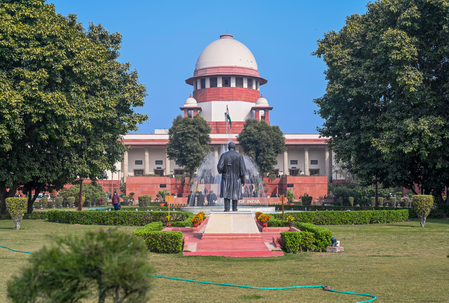
In a significant ruling, the Supreme Court overturned High Court decisions that had invalidated reassessment notices issued by Jurisdictional Assessing Officers (JAOs) under the Income Tax Act. The apex court’s order addressed a batch of appeals arising from conflicting High Court judgments on the initiation of reassessment proceedings under Sections 148 and 148A of the Income-tax Act, 1961. Legislative changes introduced through the Finance Act, 2021, and the e-Assessment of Income Escaping Assessment Scheme, 2022, played a pivotal role in the court’s decision-making process.
The Supreme Court highlighted the legislative modifications that reshaped the reassessment framework, emphasizing the introduction of automated allocation and faceless proceedings. The court deliberated on the authority of Jurisdictional Assessing Officers to issue notices and make decisions under Section 148A(d) in light of the statutory provisions and the faceless assessment mechanism. Conflicting interpretations among High Courts regarding the powers of JAOs and faceless authorities added complexity to the legal landscape.
Acknowledging the contentious nature of the issue, the Supreme Court referenced the retrospective effect of Section 147A, introduced by the Finance Act, 2026. The court clarified that the amended provisions excluded faceless units from the definition of “Assessing Officer” for Sections 148 and 148A. Consequently, the court nullified previous judgments favoring taxpayers due to the legislative amendments.
While refraining from ruling on the constitutional validity and retrospective applicability of Section 147A, the Supreme Court allowed assessees to amend their writ petitions within four weeks to challenge the new provisions. The court granted the Revenue three weeks to submit written arguments and affidavits. Additionally, the court ordered a stay on reassessment and assessment proceedings related to disputed notices pending before High Courts, subject to the courts’ conditions.
To expedite the resolution of tax disputes affecting numerous taxpayers, the Supreme Court urged all relevant High Courts to resolve the cases by September 30. The court emphasized the importance of avoiding unnecessary delays and encouraged cooperation from all parties involved.
