


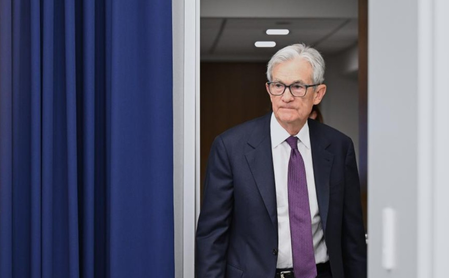
Surging oil prices due to the Middle East conflict are causing concerns for the US Federal Reserve, leading to warnings of increasing inflation and global economic disparities, especially in energy-dependent regions like Asia. Federal Reserve Chair Jerome Powell highlighted that the rise in energy costs is contributing to elevated inflation levels, making the central bank’s policy decisions more complex. Powell emphasized the uncertainty brought by the Middle East situation, stating that higher energy prices will drive up overall inflation in the short term.
The Federal Reserve opted to maintain its benchmark rate at 3.5 to 3.75 per cent, reflecting a cautious approach amid growing uncertainties surrounding the conflict’s duration and economic impact. Powell noted that while the US economy remains resilient, the global repercussions of the oil price surge are not uniform, with Western Europe and Asia experiencing more significant effects than the United States. He stressed that the Fed is closely monitoring the situation and will adjust policies based on evolving data and risks.
Powell acknowledged that energy shocks are typically temporary but highlighted the ongoing unpredictability of the current scenario, especially regarding oil prices. Despite stable labor market conditions and sustained consumer spending in the US, Powell cautioned that continued increases in gasoline prices could eventually impact household expenditure. The Fed’s stance of vigilance reflects the broader ambiguity surrounding the duration of the conflict’s disruption in energy markets and its implications on global economic stability.
Global central banks are facing renewed challenges with inflation following various recent shocks, including the pandemic, the Russia-Ukraine conflict, and trade tensions. The recent surge in oil prices further complicates the situation, particularly for emerging economies reliant on energy imports. In Asia, where several countries are major oil importers, the current spike in crude prices poses risks of widening trade deficits and domestic inflation pressures amidst uneven growth patterns.
