


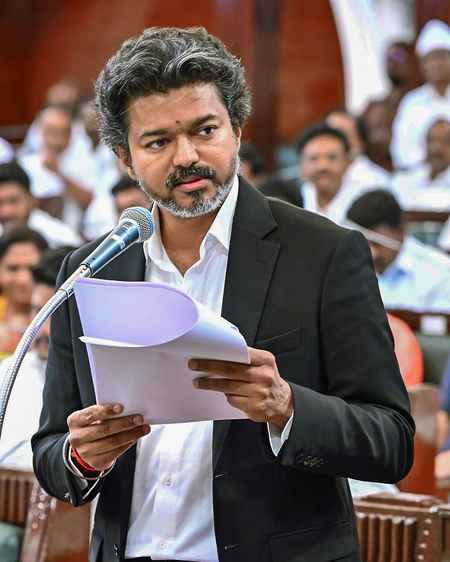
A recent incident in the Tamil Nadu Assembly sparked controversy as Chief Minister C. Joseph Vijay, known for his cinematic style, faced criticism from the Opposition. Accusations of turning legislative proceedings into a “scripted performance” were raised by Dravida Munnetra Kazhagam (DMK) leader M.K. Stalin and former Deputy Chief Minister Udhayanidhi. They objected to Vijay’s dramatic gestures and theatrical delivery, deeming it inappropriate for the Assembly’s decorum.
Vijay sought permission from the Speaker before performing a hand-slashing gesture, reminiscent of his film persona, during a narration. This incident reignited debates on the blending of film and politics in Tamil Nadu. The state has a history of film stars transitioning into politics and bringing their on-screen charisma into legislative settings.
Indian Legislatures have witnessed similar instances where film-star politicians incorporated theatrical elements into debates. From dramatic gestures to symbolic protests, the influence of cinema on politics is evident. While some actor-lawmakers maintain a subdued presence, others like Vijay continue to blur the lines between reel and real-life personas.
The controversy in Tamil Nadu aligns with a broader tradition of cinematic politics within legislative bodies. Figures like M.G. Ramachandran and N.T. Rama Rao have set precedents for actor-politicians, using dialogues and imagery from their film careers in political speeches. The influence of cinema on politics extends beyond Tamil Nadu, with prominent cine-star MPs like Amitabh Bachchan, Dharmendra, and Rekha making their mark in Parliament.
Several actors, including Govinda, Pawan Kalyan, Suresh Gopi, and Kangana Ranaut, have transitioned from the entertainment industry to political roles. Despite their on-screen charisma, their performances as lawmakers often lack the same glamour. However, their popularity among the masses continues to propel them into positions where they advocate for the public’s interests.
