


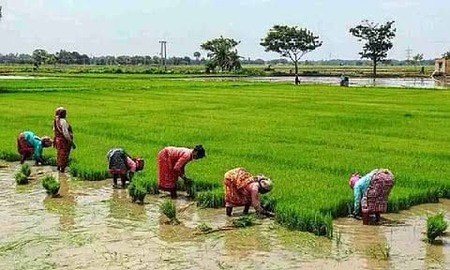
Farmer organizations in Tamil Nadu have criticized the state government’s recent crop loan waiver scheme, claiming it does not fulfill the promises made during the Assembly election campaign and might offer limited benefits to farmers. Several farmer leaders have expressed concerns that this decision could lead to dissatisfaction among rural voters and have political implications in the upcoming local body elections. They argue that the current waiver structure, tied to specific categories and loan limits, may not effectively assist a significant portion of farmers, with most benefits potentially going to Women’s Self-Help Groups and borrowers within set boundaries.
P.R. Pandian, the president of the Coordination Committee of All Farmers Associations, has disapproved of the government’s reasoning on procedural constraints, emphasizing that a state-funded waiver scheme does not require endorsement from the Union government or the Reserve Bank of India. He criticized the unnecessary mention of these agencies, considering it misleading to farmers. Pandian highlighted that Chief Minister C. Joseph Vijay had pledged a complete crop loan waiver during the campaign, leading many farmers to support his party based on these assurances. However, the partial waiver announced is viewed as insufficient by farmers, potentially benefiting Women’s Self-Help Groups and others within the specified limits more than the farming community.
Farmer leader Swamimalai Sundara Vimalnathan has raised apprehensions about the government’s category-based approach, deeming it a risky model. Reflecting on past loan waiver initiatives, he noted that former Chief Minister M. Karunanidhi had waived crop loans worth Rs 7,000 crore in 2006, while the AIADMK government under Edappadi K. Palaniswami had waived loans amounting to Rs 12,110 crore in 2021. Vimalnathan emphasized that these measures had not only benefited farmers but also individuals involved in allied agricultural activities. He cautioned that the current decision could tarnish the government’s image and lead to disillusionment among farming communities.
P.S. Masilamani, the General Secretary of the CPI-affiliated Tamil Nadu Vivasayigal Sangam, has questioned the practical advantages of the categorization process, suggesting that numerous marginal and small farmers might not receive substantial relief. He has urged the government to implement a more comprehensive waiver scheme aligning with its electoral promises.
