


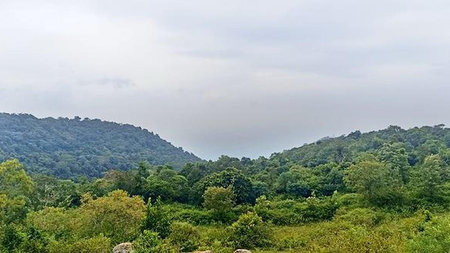
In a significant move to enhance ecological protection and climate resilience, the Tamil Nadu government has designated 100 forest blocks as Reserved Forests (RF) over the past four years. This initiative, carried out from 2021 to 2025, demonstrates a consistent commitment to preserving biodiversity-rich areas, securing wildlife corridors, and safeguarding crucial ecosystems against long-term environmental challenges. Official data shared by Forest Minister R.S. Raja Kannappan reveals that these recent notifications have expanded the state’s reserved forest area by approximately 135 sq km, elevating it from 26,450 sq km to 26,585 sq km.
The newly identified forest blocks, covering 13,494.95 hectares, are located across ten districts including Dindigul, Dharmapuri, Madurai, Kallakurichi, Theni, Sivaganga, Namakkal, the Nilgiris, Salem, and Tenkasi. Notably, the largest addition is the Highways Forest Block in Theni district, spanning 2,836.33 hectares. This strategic move underscores the government’s emphasis on safeguarding ecologically sensitive landscapes that are crucial for habitat continuity and climate stability.
Officials in the Nilgiris region emphasize the significance of the newly designated blocks in enhancing wildlife connectivity. Vengatesh Prabhu, Divisional Forest Officer (Gudalur), points out that the Cherumulli forest block shares boundaries with the Mudumalai Tiger Reserve, while the Yellamalai forest block is in proximity to the Mukurthi National Park. Bringing these areas under RF status is expected to boost biodiversity conservation, improve forest fire management, and ensure long-term habitat protection in some of the state’s most species-rich zones.
The notification of forest lands in the Megamalai region, particularly the Highways Forest Block and its extensions, has attracted attention from conservationists. These areas fall within the Megamalai–Srivilliputhur landscape in the southern Western Ghats, renowned for its high endemism and the movement of elephants, tigers, and other wildlife. The newly designated blocks are anticipated to serve as buffer and connectivity zones, aiding in mitigating fragmentation and regulating land-use pressures.
In Dindigul, the notification process has resolved longstanding disputes that had hindered notifications for years. Divisional Forest Officer Naga Satish highlights that several forest blocks had remained unnotified for nearly two decades due to boundary uncertainties, including critical habitats for the slender loris. Each notification underwent a stringent legal process under Section 16 of the Tamil Nadu Forest Act, 1882, ensuring that these forests receive permanent legal protection. The state’s objective is to secure wildlife habitats, preserve watersheds, enhance carbon sequestration, and strengthen forests as crucial long-term ecological infrastructure essential for biodiversity, water security, and climate resilience.
