


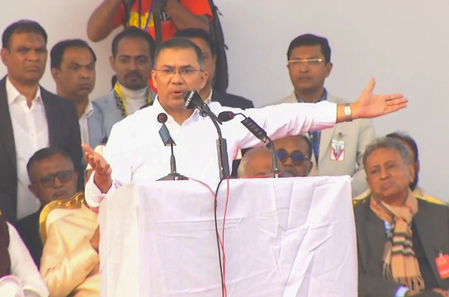
Tarique Rahman is poised to become the next Prime Minister of Bangladesh, raising questions about how he will handle relations with Pakistan. The interim government led by Muhammad Yunus saw an improvement in ties between Dhaka and Islamabad, with accusations that Yunus made concessions to Pakistan. Concerns have been raised over eased visa regulations and granting Pakistan access to Bangladesh seas, potentially facilitating terrorist activities.
The Bangladesh Nationalist Party (BNP) previously governed from 2001 to 2007, during which India and the BNP had fluctuating relations. While past governments were criticized for harboring terrorists, the current scenario may differ as the BNP is not aligned with Jamaat-e-Islami, unlike before. Officials suggest that while the BNP may maintain ties with Pakistan, Tarique Rahman is expected to prioritize fostering good relations with India.
Tarique Rahman is anticipated to focus on stabilizing the violence-stricken nation as his primary task upon assuming office. There are concerns about Pakistan’s intentions, with recent high-profile visits aimed at strengthening military cooperation raising alarms about potential threats to India. Analysts note that while the BNP historically had Islamic affiliations, Rahman’s emphasis on a “nation-first policy” signals a shift towards pragmatism in foreign relations.
Rahman’s stance against undue foreign influence in Bangladesh and his commitment to prioritizing national interests have resonated with the populace, who are wary of a return to pre-1971 dynamics. The public sentiment rejects external interference, particularly from Pakistan, as seen during the Jamaat’s influence under Yunus. Rahman’s clear stance against pro-Pakistan elements and his emphasis on safeguarding Bangladesh’s sovereignty reflect a departure from past approaches, garnering support from a populace wary of external manipulation.
