


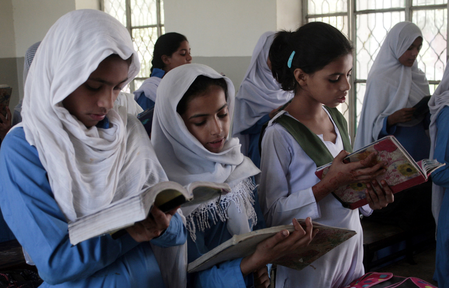
Teacher recruitment has been halted in various regions of Pakistan for more than five years, causing a significant impact on the education system. This freeze on hiring teachers is not just about financial control but is seen as a form of educational sabotage, as it deprives students of qualified educators in classrooms. In Pakistan, nearly 30,000 public primary schools are managed by a single teacher, leading to immense responsibilities for one individual.
This situation has normalized institutional neglect over time, as highlighted by Fahad Zafar, a senior manager at think-tank Tabadlab, in an opinion piece. In different provinces like Sindh, Khyber Pakhtunkhwa, and Punjab, teacher recruitment has been suspended due to various reasons ranging from administrative challenges to allegations of corruption. The abrupt stoppage of hiring without proper planning has resulted in increased workloads for existing teachers and widened learning gaps for students.
The consequences of the recruitment freeze are severe, with student-teacher ratios becoming increasingly dysfunctional each year. Fahad Zafar emphasized that reversing this damage would require at least a decade of continuous recruitment efforts to restore the education system to its baseline. The politicization of teacher transfers further complicates the situation, with educators being frequently moved from rural to urban schools based on influence rather than need, leaving underserved schools without consistent teaching staff.
Recent developments show some progress, with provinces like Sindh, Punjab, Balochistan, and Khyber Pakhtunkhwa initiating plans to address the teacher shortage crisis. However, these efforts come after years of stagnation, highlighting the long-term impact of the recruitment freeze on the education sector. The author stressed that a ban on teacher recruitment is not just a financial decision but a detrimental act that hampers children’s access to quality education, leading to long-lasting consequences for the nation’s future.
