


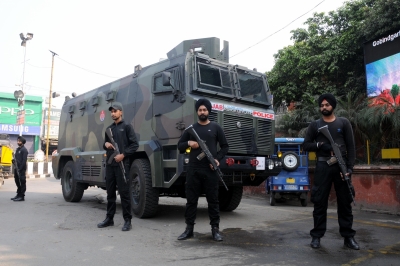
A group known as Tehreek-e-Taliban Hindustan (TTH) has taken credit for the recent attack on police officers at a border post in Punjab. The victims, Gurnam Singh and Ashok Kumar, were found dead with gunshot wounds near the India-Pakistan border on February 22. While investigations are ongoing, the TTH’s involvement has complicated the case.
Intelligence agencies are exploring the TTH’s background, as it is an unfamiliar entity that bears resemblance to Tehreek-e-Taliban Pakistan (TTP). However, officials have clarified that there is no apparent connection between the TTP and TTH. The attack seems to be part of an effort to target Indian security forces, possibly linked to the resurgence of the Khalistan movement.
The killings in Gurdaspur are seen as part of a broader agenda to reignite the Khalistan movement in India. The ISI’s alleged involvement in supporting Khalistani groups has raised concerns, prompting collaborative efforts between India, Canada, and the UK to counter this threat. The Punjab Police are exploring various angles in the investigation, including potential links to cross-border terrorism and smuggling activities.
The ISI’s purported strategy involves using various means, including international drug syndicates and criminal networks, to disrupt peace in Punjab. Recent incidents, such as the attack in Gurdaspur, are believed to be orchestrated to serve this agenda. The absence of CCTV coverage at the border post during the attack indicates a calculated operation by the perpetrators.
Security agencies are on high alert, anticipating further attempts to target security personnel in Punjab. The ISI’s reported use of drones to smuggle arms and narcotics into the region underscores the escalating security challenges. Authorities are intensifying efforts to counter these threats and maintain stability in the region.
