


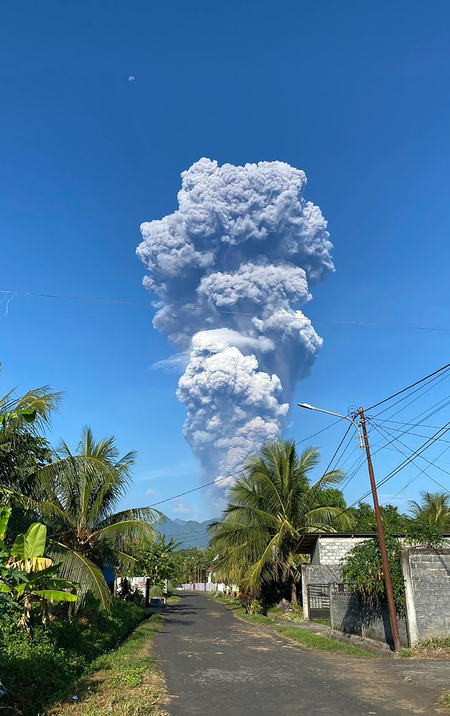
Three individuals lost their lives following the eruption of Mount Dukono in Indonesia’s North Maluku province. Search and rescue teams were engaged in rescuing approximately 20 hikers who were stranded due to the volcanic activity. The eruption occurred at 7:40 am local time, propelling a plume of volcanic ash up to 10 km into the atmosphere, as per the Xinhua news agency.
Mount Dukono’s eruption prompted local authorities to caution residents against venturing within a 4-km radius of the crater, highlighting the potential risk of volcanic mudflows during rainy conditions. Earlier in February this year, the volcano had erupted, leading the country’s Volcanology and Geological Disaster Mitigation Centre to issue an aviation alert.
The volcanic activity on Halmahera Island saw Mount Dukono releasing a column of ash reaching heights of 2,000 meters, with dense clouds drifting southward from the crater. To ensure aviation safety, a Volcano Observatory Notice for Aviation (VONA) was raised to the orange level, the second-highest alert, restricting flights from operating below 5 km near the volcano.
In light of the volcanic threats, residents, tourists, and locals were advised to steer clear of the Malupang Warirang crater, an active site within a 4 km radius of Mount Dukono. Individuals residing in the vicinity were also urged to have face masks on hand to safeguard against respiratory risks posed by volcanic ash. Mount Dukono, standing at 1,087 meters above sea level, is among Indonesia’s 127 active volcanoes.
Indonesia witnessed another volcanic event last month when Mount Semeru in East Java province erupted multiple times on April 6, emitting dense ash up to 1,100 meters above its peak, according to the Centre for Volcanology and Geological Hazard Mitigation. Reports from the Semeru monitoring post indicated that the ash plumes, varying from white to grey, moved southwards with moderate intensity.
