


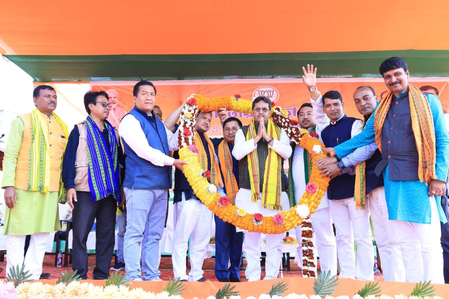
Tripura Chief Minister Manik Saha has declined the Tipra Motha Party’s request to introduce the Roman script for the tribal Kokborok language, spoken by nine of the 19 tribal communities in the state. This decision comes ahead of the elections to the Tripura Tribal Areas Autonomous District Council (TTAADC). Saha emphasized that the BJP government opposes adopting any foreign script for Kokborok, urging tribal intellectuals to choose a suitable script that preserves traditions and culture.
Addressing a tribal gathering in South Tripura, Saha highlighted the importance of maintaining indigenous scripts, stating that adopting the Roman script could lead to the loss of tribal heritage among the younger generation. He pointed out the successful development of a script by the Chakma community and encouraged similar efforts for Kokborok. The Chief Minister expressed concerns that the repeated demand for the Roman script might confuse the youth and erode cultural identity.
Saha asserted that the BJP is committed to the overall progress of indigenous communities, citing initiatives to support their economic welfare, cultural preservation, and traditional values. He emphasized the party’s efforts to strengthen its presence in tribal areas through performance-based engagement with voters, rather than coercive tactics during elections.
The Tripura Chief Minister’s stance contrasts with the demands of the BJP’s ally, the tribal-based party TMP, which has been advocating for the adoption of the Roman script for Kokborok. Kokborok, part of the Tibeto-Burman language family, shares linguistic ties with other languages in the northeastern region like Bodo, Garo, and Dimasa. Census data from 2011 shows that Kokborok is spoken by 8,80,537 individuals in Tripura, constituting nearly 24% of the state’s population. It serves as the mother tongue for nine of the 19 tribal communities in the region, with nine major Kokborok clans identified. Efforts to address this issue have been ongoing since 1988, with the formation of commissions led by tribal leader Shyama Charan Tripura and linguist Pabitra Sarkar.
