


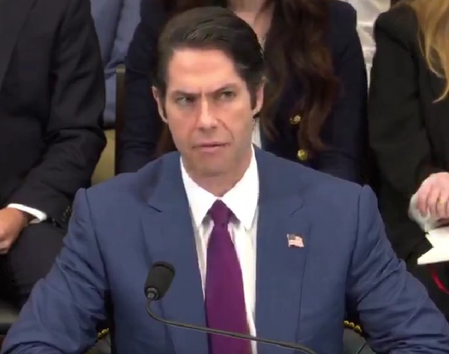
The Trump administration has approved $1.5 billion for energy infrastructure in South and Southeast Asia to lessen dependence on China for critical supply chains. This move aims to bolster American liquefied natural gas (LNG) exports and energy equipment while enhancing supply chains in a region deemed strategically significant by Washington. The announcement was made during a House Foreign Affairs Committee hearing focused on securing critical supply chains and reducing reliance on China.
DFC Chief Executive Officer Benjamin Black informed lawmakers that the agency is realigning itself as a crucial tool of American economic statecraft under President Donald Trump. Black highlighted that the DFC now possesses “$205 billion of investment capacity” and has expanded its investment pipeline to encompass “more than 340 deal opportunities totaling $78 billion” in various sectors. The agency’s focus includes regions vital to US economic security such as East Asia and the Pacific, Central Asia, the Middle East, Africa, and the Western Hemisphere.
During the hearing, discussions centered on how the United States is utilizing development finance, infrastructure investment, and economic partnerships to fortify resilient supply chains across sectors like energy, telecommunications, artificial intelligence, and critical minerals. House Foreign Affairs Committee Chairman Brian Mast emphasized the necessity for the US to reduce its reliance on China for crucial technologies and raw materials essential for its economy and national security. Mast stressed that China’s influence over mines, processing facilities, logistics networks, and technology platforms poses a threat to the US and its allies.
In addition to the South Asia initiative, Black highlighted investments in critical minerals, telecommunications, and transport infrastructure to diversify global supply chains. These investments include support for trusted telecommunications providers in Kazakhstan, backing for a critical minerals investment consortium, and infrastructure projects across Africa. Officials from the US Trade and Development Agency (USTDA) and the Millennium Challenge Corporation (MCC) also detailed projects aimed at enhancing transport, energy, and digital infrastructure in emerging markets while providing alternatives to Chinese-backed investments.
