


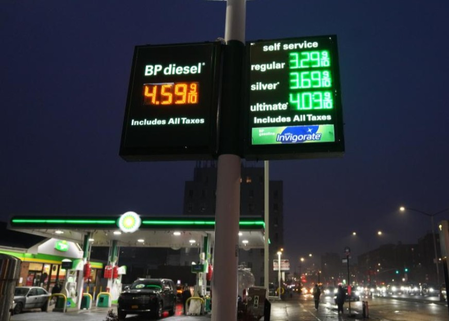
The Trump administration has indicated that the future of US fuel prices is linked to the situation in Iran, stating that a sustained decrease in gasoline costs hinges on the reopening of the Strait of Hormuz and progress in ongoing talks. Treasury Secretary Scott Bessent, speaking at a White House press briefing, mentioned that the timeline for lower gas prices is uncertain due to disruptions in global oil supply related to tensions with Iran.
Bessent expressed optimism about the possibility of gas prices dropping back to $3 between June 20th and September 20th, contingent on the evolution of negotiations. He highlighted that the Strait of Hormuz has not fully reopened yet and emphasized that energy markets will stabilize once shipping routes return to normal operations. Discussions with Middle Eastern finance ministers revealed that oil production could swiftly resume once conditions improve, with Bessent noting that pumping could restart within a week of the Strait reopening.
The administration is closely monitoring fuel price trends and encouraging retailers to pass on reductions as crude prices ease. White House Press Secretary Karoline Leavitt stated that the current price pressures are part of a broader strategic effort related to the Iran situation. She underscored that the administration anticipates a decline in fuel prices post the conclusion of operations and the reopening of the Strait, underscoring the government’s emphasis on domestic energy production. Bessent characterized the strategy as involving short-term economic fluctuations for long-term benefits, indicating that temporary economic challenges are part of a larger plan. The administration also highlighted its efforts to stabilize global energy flows through collaboration with allies and regional partners.
