


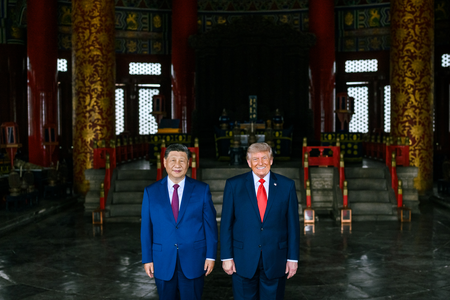
When US President Donald Trump and Chinese President Xi Jinping met in Beijing, their cordial exchange of pleasantries and emphasis on cooperation sparked optimism about relations between the two superpowers. However, the lack of major breakthroughs on issues like Taiwan highlighted the ongoing challenges in the Sino-US relationship. The leaders plan to meet multiple times this year, with Xi’s visit to Washington in September on the agenda.
Trump emphasized the ability to resolve difficulties quickly, highlighting a positive outlook for the future. Xi echoed a cooperative sentiment, emphasizing the importance of partnership over rivalry between the US and China. Despite the cooperative atmosphere, long-standing geopolitical tensions, especially regarding Taiwan, were brought to the forefront during the summit.
The leaders found common ground on Iran’s nuclear ambitions but diverged on China’s oil purchases from Iran. Trump mentioned agreements on trade deals benefiting both countries, including China’s commitments to buy US products. However, details on addressing the temporary trade truce set to expire later this year were not disclosed. The discussions also touched on North Korea and its nuclear program, although specific details were not revealed.
China’s nuclear buildup and the potential for a new arms control treaty involving China were topics of interest. Concerns over China’s growing nuclear stockpile were raised, with projections indicating a significant increase in warheads by 2030. The leaders did not announce specific plans on addressing this issue. Overall, the summit highlighted both cooperation and challenges in the complex relationship between the US and China.
