


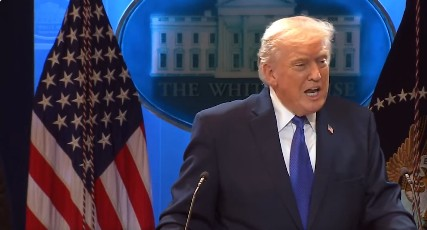
US President Donald Trump expressed disappointment with the Supreme Court’s decision to strike down his use of a key tariff authority. He criticized certain members of the court for lacking courage and announced plans to implement a new “10 per cent global tariff” to maintain his tariff program. Trump thanked Justices Clarence Thomas, Samuel Alito, and Brett Kavanaugh for dissenting from the ruling.
Despite the setback, Trump emphasized that the Supreme Court’s judgment did not halt his tariff agenda. He highlighted the availability of alternative methods, practices, statutes, and authorities that he could utilize. Trump clarified that while the ruling affected a specific use of IEEPA tariffs, other tariff options remained at his disposal.
Existing tariffs will continue, and new tariffs are on the horizon, according to Trump. He confirmed the immediate imposition of a 10 per cent global tariff under Section 122, in addition to the existing tariffs. The administration is also initiating investigations under Section 301 to address unfair trading practices by other countries and companies.
Trump asserted his authority to impose tariffs without requiring further approval from the US Congress. US Trade Representative Jameison Greer echoed Trump’s stance, emphasizing the implementation of Section 122 and the durability of Section 301 investigations. The issue of collected tariff revenue and potential refunds remains uncertain, with Trump suggesting that further litigation may be necessary.
Tariffs have been a focal point of Trump’s economic strategy, with claims of their role in boosting the stock market and revitalizing domestic industries. The use of tariffs in the US is governed by various laws, including those related to national security and unfair trade practices. Disputes over the extent of presidential tariff powers often lead to legal challenges that can reach the Supreme Court, underscoring the complexity of trade policy in the US.
