


US President Donald Trump has announced an increase in tariffs on South Korea, aiming to pressure the country to fulfill its investment commitment to the United States. Trump cited delays in the implementation of the bilateral trade deal between the two nations as the reason for raising tariffs to 25 percent from 15 percent. The move is seen as an effort to expedite the approval of a special bill supporting South Korea’s $350 billion investment pledge to the US.
Experts suggest that Trump’s decision is primarily focused on ensuring the passage of the delayed investment bill in South Korea’s National Assembly. The move is perceived as a strategy to secure a firm commitment from South Korea amid uncertainties, including potential legal challenges to reciprocal tariffs. The US administration may have felt that South Korea was hesitant in fulfilling its investment promise, prompting this tariff escalation.
Analysts speculate that Trump’s tariff hike could be influenced by various concerns, including criticism over his immigration policies and international tensions. The decision may also be linked to South Korea’s recent regulatory actions, such as the investigation into data breaches involving US-listed companies. The ongoing probe into Coupang Inc.’s data leakage incident has raised concerns among US lawmakers and investors, potentially impacting Trump’s trade decisions.
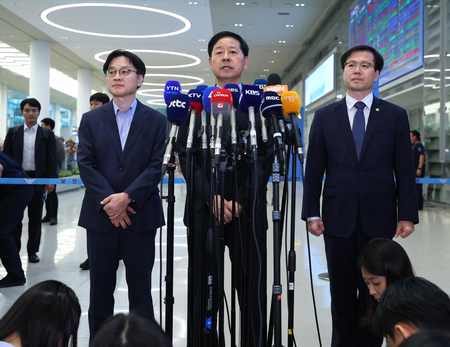
South Korean officials have expressed bewilderment over Trump’s tariff announcement via social media, emphasizing the need for diplomatic communication. The Seoul government plans to engage in discussions with Washington regarding the progress of the US investment bill and develop a response strategy. Industry Minister Kim Jung-kwan is scheduled to visit Washington to address the tariff issue with US Commerce Secretary Howard Lutnick, following an emergency interagency meeting in Seoul.
