


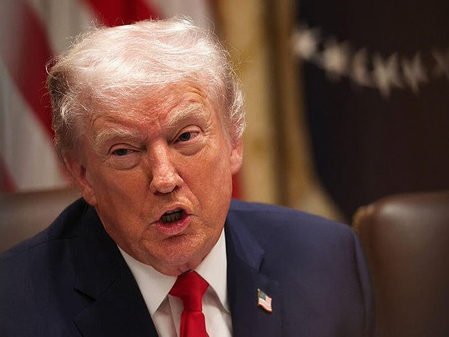
US President Donald Trump expressed his backing for Israeli actions against Iran’s ballistic missile program in case negotiations between the US and Iran do not succeed. The support was conveyed during a meeting with Israeli Prime Minister Benjamin Netanyahu in Florida. Discussions have taken place among US military and intelligence officials on potential ways to aid Israel in operations targeting Iran’s missile infrastructure, such as offering aerial refueling and assistance in securing overflight permissions from regional countries. Notably, Jordan, Saudi Arabia, and the United Arab Emirates have publicly declared their airspace off-limits for attacks on Iran or for Iran to launch assaults on other nations.
US Secretary of State Marco Rubio, during a visit to Slovakia, emphasized his preference for resolving tensions with Iran through diplomatic channels. The upcoming second round of US-Iran nuclear talks scheduled in Geneva will see US envoy Steve Witkoff and Jared Kushner representing Washington. The initial round held in Oman’s Muscat was deemed a positive start by both sides but did not yield any significant breakthroughs. Iranian Foreign Minister Seyed Abbas Araghchi is set to lead a delegation to Geneva for indirect talks with the US, with differing views on the desired outcomes revealing the delicate nature of the diplomatic efforts.
Araghchi’s delegation is expected to engage with various officials, including Swiss Foreign Minister Ignazio Cassis, Omani Foreign Minister Sayyid Badr bin Hamad Al Busaidi, and the Director-General of the International Atomic Energy Agency, Rafael Grossi. The talks aim to navigate the complexities of potential agreements, highlighting the challenges ahead in reaching a consensus on key issues.
