


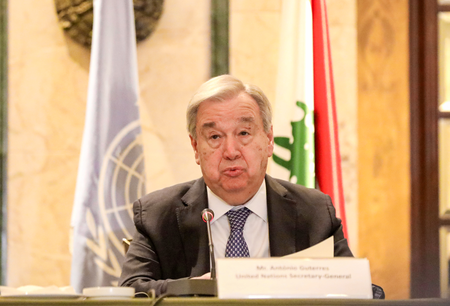
UN Secretary-General Antonio Guterres emphasized the need for political determination to hasten and conclude the global battle against HIV during a high-level UN General Assembly meeting. Guterres, speaking through UN Deputy Secretary-General Amina Mohammed, highlighted the importance of finding solutions and rallying political support for this cause. Over the past 45 years since the first AIDS case was reported, the world has shown remarkable unity and determination, although challenges persist.
AIDS-related deaths have significantly decreased by 70% since their peak in 2004, and by 54% since 2010, thanks to governmental commitments and global investments. Notably, HIV prevention and treatment efforts have led to a 40% reduction in new infections since 2010, with over 32 million individuals currently benefiting from life-saving antiretroviral therapy. Despite these advancements, Guterres pointed out that the fight against AIDS is far from over, with 9.2 million individuals still lacking access to necessary HIV treatment as of 2024.
Guterres proposed five key strategies to accelerate progress in combating HIV, including addressing disparities in access to prevention and treatment services, upholding community leadership in the response, safeguarding human rights, ensuring adequate financing, and revitalizing the collaborative spirit that has driven the HIV response. He underscored the importance of global solidarity and cooperation in overcoming fear, inequality, and injustice, emphasizing the essential role of international, regional, and local institutions in working together towards this common goal.
The UN chief stressed that the ongoing meeting presents an opportunity to showcase the international community’s ability to unite around principles of science, human dignity, solidarity, and shared responsibility. He urged collective action to eliminate AIDS as a public health threat by 2030, emphasizing that the responsibility lies with each individual to contribute to this critical mission.
