


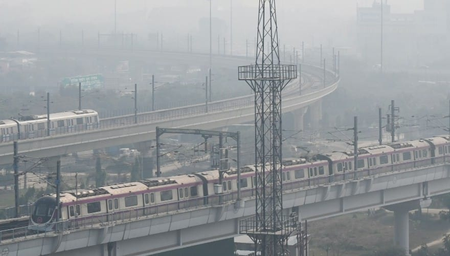
The Union Cabinet has given the green light for an 11.56 km extension of the Noida Metro, stretching from Sector 142 to Botanical Garden. This extension will introduce eight new elevated stations, expanding the metro network to 61.62 km in Noida and Greater Noida. The move aims to enhance urban mobility in the National Capital Region by providing seamless connectivity with Delhi Metro’s Blue and Magenta Lines.
The new corridor is expected to facilitate access to key commercial centers, IT parks, educational institutions, and healthcare facilities in the region. By integrating with existing metro lines, it is anticipated to alleviate road congestion and offer direct connectivity to high-demand corridors. The expansion is part of efforts to improve public transportation in Noida, addressing the current lack of efficient connectivity.
The extension project will connect various important zones in Noida, including commercial hubs like Advant Business Park, Skymark One Mall, and the Mall of Noida. It will also enhance connectivity to multinational companies, IT hubs, educational institutions such as Amity University, and healthcare facilities like Max Super Speciality Hospital. The aim is to strengthen connectivity, boost economic activity, and enhance urban mobility for residents and commuters.
By extending the Noida Metro Rail Project, the new corridor is expected to significantly reduce carbon emissions compared to traditional fossil fuel-based transport modes. The improved accessibility and reduced travel times are set to enhance productivity by enabling efficient travel to workplaces and major transport hubs. Additionally, the project is likely to stimulate local businesses, attract investments, and foster development in less-connected areas.
Officials emphasized that the extension of the Noida Metro network will promote equitable access to public transport, benefiting diverse socio-economic groups and reducing transport disparities. This move is anticipated to enhance the quality of life by cutting commute times and improving access to essential services. The project is seen as transformative for the city, promising stronger connectivity, reduced traffic congestion, environmental sustainability, economic growth, and an overall improvement in the quality of life.
