


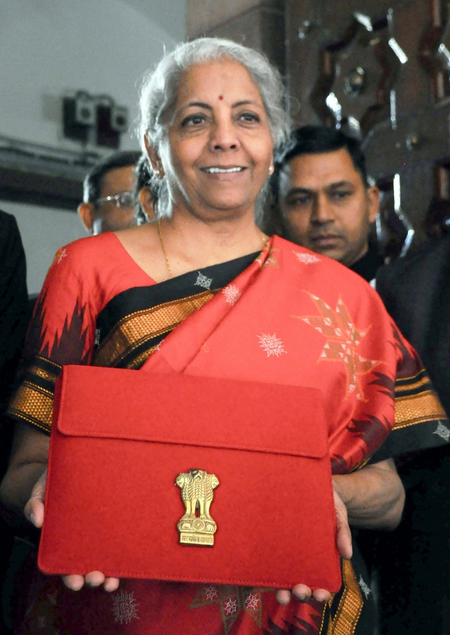
Union Finance Minister Nirmala Sitharaman showcased the government’s blend of tradition and technology by transporting the Union Budget documents on a digital tablet enclosed in a red ‘bahi-khata’ style pouch. This move aligns with the paperless Budget format initiated by the Prime Minister Narendra Modi government. Sitharaman had replaced the old leather briefcase, a symbol from British colonial times, with the traditional bahi-khata back in 2019.
The transition to using a digital tablet in 2021 for carrying the Budget papers further emphasizes a modern and eco-friendly approach. This upcoming Budget presentation will mark her ninth consecutive one as Finance Minister. The bahi-khata, a red pouch containing the digital tablet with the Budget documents, is adorned with the golden national emblem, symbolizing a departure from the colonial-era briefcase tradition that dates back to 18th-century Britain and was followed in India for years.
By opting for the bahi-khata, Sitharaman aimed to distance herself from colonial symbols and embrace something deeply rooted in Indian culture. Following her first Budget presentation in 2019, the Finance Minister emphasized the need to move past the “British hangover” and embrace an indigenous alternative. Sitharaman also noted that the bahi-khata was more convenient and easier to carry.
After presenting the Union Budget 2026-27 in Parliament at 11 a.m., Finance Minister Sitharaman will engage with approximately 30 college students from various regions of the country. These students will have the opportunity to witness the live Budget presentation from the Lok Sabha Gallery, providing them with a firsthand experience of one of the most significant Parliamentary events of the year. Selected from diverse academic backgrounds including commerce, economics, medical education, and vocational courses, the students represent different states across India.
They will also visit the Ministry of Finance at Kartavya Bhawan-1 and engage with senior officials to gain insights into the ministry’s operations, policy formulation processes, and the role of institutions in nation-building.
