


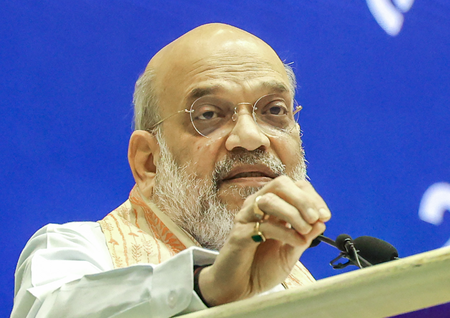
Union Home Minister Amit Shah is set to introduce a Land Port Management System (LPMS) to enhance border and internal security. The LPMS is a modern digital platform aimed at integrating operations across land ports into a unified system, allowing for secure real-time exchange of logistics and regulatory information. This initiative aligns with the government’s focus on smart border management, emphasizing efficiency, transparency, and security in cross-border trade and passenger movement through technology-driven solutions.
The LPMS launch will also include the inauguration of stakeholder accommodation facilities at Dawki (Meghalaya) and Srimantapur (Tripura) Land Ports. This move is intended to bolster infrastructure support for border security personnel and other stakeholders, marking a significant step towards a technology-enabled smart border management system in India. The system is designed to strengthen trade facilitation, connectivity, and national security in line with the vision of ‘Viksit Bharat by 2047’.
The LPMS serves as a neutral and open platform facilitating seamless coordination among various stakeholders, including government agencies and private operators. By introducing end-to-end digital workflows for cargo and passenger processing, the system streamlines operations through features like slot booking, payments, tracking, and single-window clearances. Integrated with national platforms such as ICEGATE, ULIP, and the motor vehicle ecosystem, LPMS ensures efficient, transparent, and interoperable border management.
The Land Ports Authority of India (LPAI), under the Ministry of Home Affairs’ Department of Border Management, oversees the development and management of land ports to enhance trade, connectivity, and regional cooperation. Currently, LPAI operates 15 land ports along India’s international borders, including those along the India–Pakistan, India–Nepal, India–Bhutan, India–Bangladesh, and India–Myanmar borders.
