


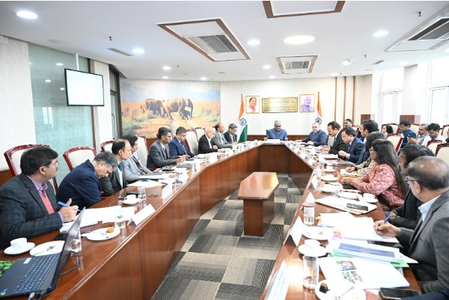
Expressing worry about the air quality in Delhi-NCR, Union Minister for Environment, Forest, and Climate Change Bhupender Yadav instructed the Punjab government to ensure the proper functioning and efficient use of all Crop Residue Management (CRM) machines. He also called upon the Ministry of Agriculture to develop innovative strategies, in collaboration with stakeholders and scientists, to manage crop residue effectively and combat stubble burning.
During a review of the Action Plans of Punjab and Rajasthan aimed at tackling air pollution in Delhi-NCR, Yadav emphasized the importance of evaluating the current measures’ effectiveness. He decided that monthly reviews of state-level action plans would be conducted at the Ministerial level and stressed the need for sector-specific action plans with clearly defined responsibilities for execution by relevant departments.
Yadav highlighted the significance of ensuring all CRM machines in Punjab are operational and utilized effectively, suggesting the preparation of Standard Operating Procedures (SOPs) for certifying machines in good working order. He also advocated for the promotion of pelletisation plants and the utilization of crop residue in thermal power plants and brick kilns, emphasizing the installation of Compressed Bio Gas (CBG) plants as an eco-friendly solution for crop residue management.
In Rajasthan, Yadav pointed out the need to address public transport gaps in Alwar, Bhiwadi, Neemrana, and Bharatpur, stressing the priority procurement of electric buses and the expansion of charging infrastructure in urban areas and along highways. He also raised concerns about unplanned truck parking along the National Highway in Bhiwadi and Neemrana, calling for immediate action to identify parking lots and develop a plan to prevent congestion.
