


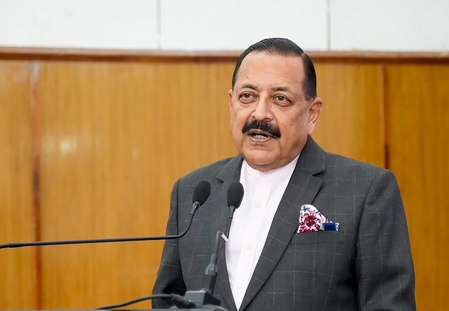
The North Eastern Space Applications Centre (NESAC) is crucial in enhancing India’s border security and driving development in the Northeast through space-based technologies, as stated by Union Minister of State for Science and Technology Jitendra Singh. NESAC is actively engaged in projects such as geo-spatial mapping of the India-Myanmar border and inter-state boundaries, along with initiatives in agriculture, disaster management, water resources, forestry, and governance.
Singh emphasized NESAC’s significance as a bridge between India’s space endeavors and grassroots progress, highlighting its support for national security and regional growth through satellite and geospatial technologies. NESAC is currently executing close to 130 space application projects across the northeastern states, with a focus on sectors like agriculture, forestry, urban planning, geosciences, disaster management, and capacity building.
With frequent floods impacting the region, Singh directed NESAC to enhance the precision of its flood early warning systems to offer more specific and timely alerts to vulnerable communities. He also encouraged collaboration with state governments to replicate successful rainwater harvesting models for long-term water security. Additionally, Singh stressed the importance of bamboo as a key economic resource in the Northeast, calling for coordinated efforts to map bamboo resources and enhance their value.
Highlighting the strategic relevance of geospatial technologies in border areas, Singh urged NESAC to strengthen its ‘ManzilNE’ GeoTourism dashboard by involving private tourism stakeholders. He also advocated for increased partnerships with central ministries, state governments, research institutions, startups, and industries to expedite the adoption of space technologies. Singh affirmed that institutions like NESAC would play a pivotal role in advancing governance, disaster resilience, and sustainable development in the Northeast.
