


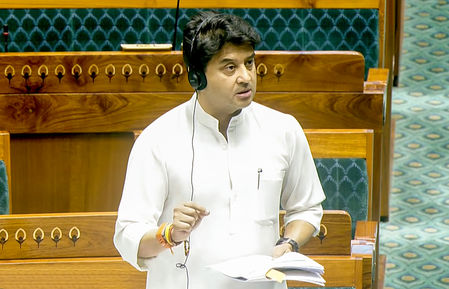
Union Minister Jyotiraditya Scindia emphasized the significance of developing an indigenous 4G telecom stack for Bharat Sanchar Nigam Limited, marking a crucial stride towards India’s self-reliance in telecom equipment. This move positions India among a select group of nations with similar capabilities, as stated by Scindia in the Lok Sabha. Under Prime Minister Narendra Modi’s leadership, India is steadily advancing towards technological independence in the telecom sector.
Scindia also noted the revival of BSNL, highlighting that the public sector telecom company achieved quarterly net profits for the first time in nearly 18 years during FY 2024–25. Additionally, BSNL’s subscriber base has grown from 8.55 crore to 9.27 crore, indicating a rise in consumer trust. The deployment of approximately 1 lakh 4G towers has already taken place, with plans to introduce 5G services once the 4G network stabilizes.
Furthermore, Scindia informed the House about the government’s initiatives to enhance mobile connectivity, particularly in border and remote areas. Notably, villages within 50 kilometers of the international border are now considered the “first villages” of the country under the Vibrant Villages Programme, showcasing a shift in development focus. The government is also backing telecom expansion through the Digital Bharat Nidhi, which supports connectivity projects in rural and challenging terrains.
In Rajasthan, over 97 percent of border villages already benefit from mobile coverage, while progress in Uttarakhand shows that 684 out of 705 border villages have been connected, with ongoing efforts to cover the remaining villages. Scindia emphasized that India boasts one of the world’s largest telecom networks, facilitating services like digital payments and direct benefit transfers. He also highlighted the success of the BharatNet program, connecting over 2.15 lakh Gram Panchayats with broadband services.
