


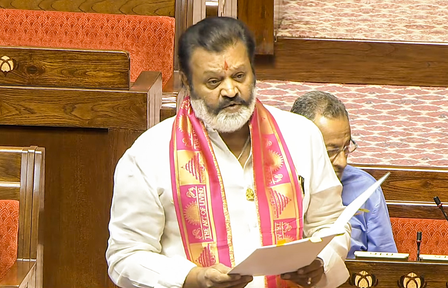
Union Minister of State for Petroleum and Natural Gas, Suresh Gopi, stated that any decision regarding revising petrol, diesel, and LPG prices in India hinges on the availability and stability of global crude oil supplies. Gopi emphasized the necessity of monitoring global energy market developments before adjusting fuel prices.
Gopi mentioned that assessments would be conducted based on the flow of crude oil supplies and the overall energy scenario. Additionally, Minister of Petroleum and Natural Gas, Hardeep Singh Puri, highlighted the challenges in the petroleum sector due to international tensions, leading to a rise in petrol prices. However, Puri assured that the government aims to shield citizens from the impact of price hikes.
Public sector oil companies like Indian Oil, Bharat Petroleum, and Hindustan Petroleum are currently absorbing losses to mitigate the impact of soaring global oil prices on consumers. Despite recent price increases, the disparity between global crude costs and retail prices continues to strain the financial health of these oil firms.
There are positive indications of a potential US-Iran peace deal, which could result in the reopening of the Strait of Hormuz, facilitating the resumption of oil and gas exports from the Persian Gulf. This development is expected to lower energy prices globally, as the Strait of Hormuz plays a crucial role in the transit of around 20% of the world’s oil and gas exports.
India has diversified its oil imports by sourcing from alternative markets like Venezuela, Nigeria, Angola, and Russia. In May, India emerged as the second-largest importer of Russian oil after China, aiming to reduce dependency on traditional oil sources.
