


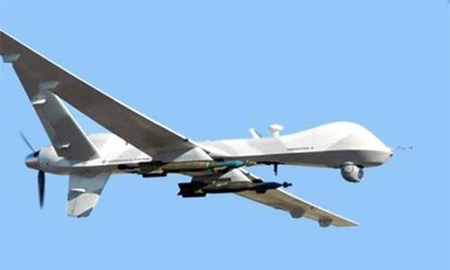
US Air Force officials informed lawmakers about the urgent evaluation of a replacement for the MQ-9 Reaper drone due to recent combat experiences revealing both its importance and weaknesses. The changing nature of warfare in regions like the Middle East and Ukraine is prompting a reevaluation of how unmanned aircraft are developed and deployed. With the growing use of drones globally and the increasing need for surveillance and strike capabilities in the Indo-Pacific, the Air Force is considering new unmanned platforms.
General David Tabor, Deputy Chief of Staff for Plans and Programmes, highlighted the significance of the MQ-9 despite losses suffered in recent operations. The Air Force currently operates approximately 135 MQ-9 aircraft and is maintaining 56 combat lines worldwide. Discussions are underway for immediate purchases to replace losses and the development of a next-generation unmanned system that is expected to be more cost-effective and easier to produce than the current fleet.
Lieutenant General Christopher Niemi emphasized the potential for a future system to be more affordable, modular, and simpler to mass-produce compared to the existing MQ-9 drones. The Air Force aims to have unmanned aircraft capable of operating in high-threat environments while allowing for the removal of expensive components to reduce costs. Industry response to a recent request for information on future unmanned systems has been substantial, indicating a growing interest in the defense sector for advanced technologies.
The lessons learned from conflicts like the one in Ukraine, where low-cost drones are gaining prominence, are shaping the Air Force’s pursuit of affordable mass munitions and systems designed for rapid large-scale manufacturing. This development is significant for India, which has procured MQ-9B Predator drones from the US for maritime surveillance, border monitoring, and intelligence gathering purposes. The vulnerabilities of large drones in contested airspace have accelerated global efforts to develop more affordable, resilient, and AI-driven unmanned systems.
