


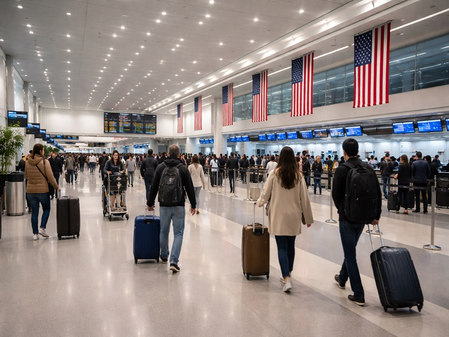
US airport security officials have upheld the implementation of stricter identity regulations despite concerns raised by lawmakers about potential impacts on immigrants and international students traveling within the country. The Transportation Security Administration, during a House Homeland Security Committee hearing, confirmed the full enforcement of the Real ID law and introduced the “Confirm ID” program, which imposes a $45 fee on travelers lacking compliant identification.
TSA Acting Administrator Ha Nguyen McNeill explained that the fee aims to cover the costs of additional screening procedures and alleviate the financial burden on taxpayers. Despite the Real ID law being in place for over 20 years, approximately six percent of travelers still do not comply, causing strains on TSA resources, especially during peak travel times.
Lawmakers expressed worries that the new policy might disproportionately affect international students, recent immigrants, and visa holders due to delays in obtaining necessary documents during visa transitions or state-level processing backlogs. They cautioned that the fee could raise travel expenses, create confusion at airports, and result in longer wait times, missed flights, and inconsistent treatment for travelers.
McNeill emphasized that Real ID enforcement is crucial for aviation security, highlighting identity verification as a fundamental aspect of the US airport screening system. She clarified that the Confirm ID program does not compromise security standards but rather adds an extra layer of verification for individuals without compliant documents. Immigration advocates argued that lawful travelers should not face penalties due to bureaucratic delays beyond their control, especially when transitioning between federal immigration documents and state-issued identification.
Members of Congress pledged to monitor the program’s implementation and its effects on immigrants and students, emphasizing that security enhancements should not inadvertently hinder legal travel. With the upcoming summer travel season approaching, concerns are mounting as millions of individuals, including students, workers, and families, prepare to traverse the country.
