


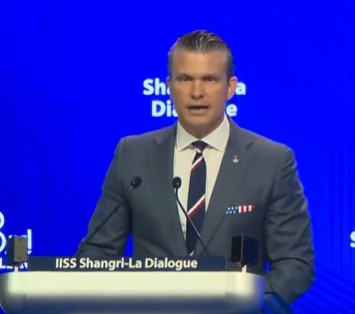
US Defence Secretary Pete Hegseth emphasized the need for a balanced approach in transferring wartime operational control (OPCON) to South Korea. Speaking at a defense forum in Singapore, Hegseth highlighted the importance of respecting the longstanding roles of the US military. There are concerns over differing views between Seoul and Washington regarding the timeline and process of the OPCON transition.
Seoul has proposed regaining wartime OPCON from Washington by 2028, aiming to complete the transfer before 2030. However, doubts have arisen over whether both sides align on the timeline, with US Forces Korea Commander Gen. Xavier Brunson suggesting meeting conditions for the OPCON transfer by early 2029. South Korea initially handed over operational control of its troops during the Korean War to the US-led UN Command, later transferring it to the Combined Forces Command in 1978.
During the regional forum in Singapore, Brunson stressed the necessity of ensuring proper military capabilities and readiness for the OPCON transition. He emphasized the strategic importance of having the right capabilities at the right time and place. Hegseth praised Seoul’s determination to reclaim wartime OPCON, viewing it as a positive development that offers more strategic options for both South Korea and the US on the Korean Peninsula.
Hegseth reaffirmed US support for South Korea’s nuclear-powered submarine program, emphasizing the enhancement of deterrence and regional stability. He highlighted the strategic significance of allies developing undersea warfare capabilities. The US endorsed South Korea’s plan to build conventionally armed nuclear-powered attack submarines, with South Korea aiming to launch its first vessel in the mid-2030s.
Commending South Korea’s commitment to security, Hegseth lauded the decision to increase defense spending and assume greater responsibility for conventional defense. He praised President Lee’s pragmatic leadership, urging other allies and partners to follow suit for regional stability. The USFK Commander Brunson’s description of the Korean Peninsula as a “dagger” toward China sparked criticism from Beijing, with the Chinese Embassy in Seoul accusing him of being belligerent.
