


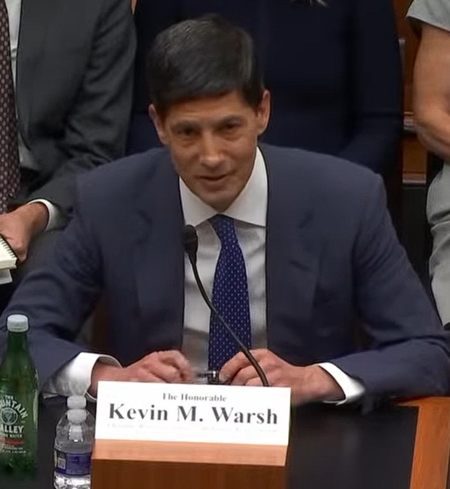
US Federal Reserve Chairman Kevin Warsh assured Congress of the central bank’s commitment to managing inflation while maintaining interest rates and planning a comprehensive review of monetary policy practices. Warsh emphasized the Fed’s dedication to price stability and its intolerance for persistently high inflation levels.
Warsh reported that the US economy was growing steadily, with household consumption moderating, manufacturing output increasing, and a resilient labor market, although the housing sector was lagging. He reiterated the Fed’s goal of achieving 2% inflation and emphasized the importance of accountability in achieving this target.
Acknowledging external factors beyond the Fed’s control, Warsh highlighted the central bank’s role in ensuring stable prices through interest rates and balance sheet management. He expressed confidence in the Fed’s ability to fulfill its mandate through commitment, responsibility, and effective tools.
Warsh pointed out the significant rise in business investment, particularly in equipment and high-technology sectors, reflecting strong demand for artificial intelligence-related equipment and software. He underscored the Fed’s focus on monitoring the impact of artificial intelligence on employment and inflation.
Warsh announced reviews in various areas, including Fed communications, balance-sheet policy, data utilization, productivity, and inflation frameworks, with task forces expected to present their findings by the year-end. The congressional hearing revealed partisan divides, with discussions on maintaining the Fed’s independence and its response to political pressures.
Federal Reserve decisions on interest rates have global implications, influencing borrowing costs, the dollar value, and international investment flows. Changes in US monetary policy are closely monitored by governments, central banks, and financial markets worldwide.
