


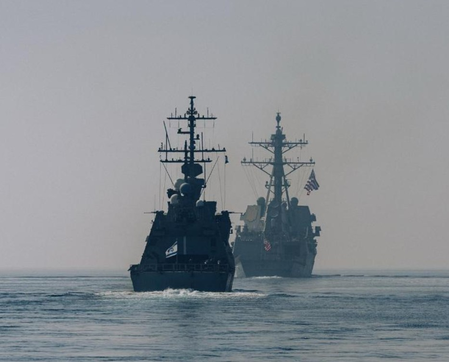
Lawmakers and a senior State Department official highlighted the strategic significance of the US naval support facility at Diego Garcia, stressing its role in safeguarding Indian Ocean sea lanes to counter China’s influence in the Indo-Pacific. Congressman Bill Huizenga, speaking at a House subcommittee hearing, emphasized the critical nature of the Indian Ocean as a vital global maritime route, carrying a substantial portion of the world’s oil trade. He underscored the need for enhanced naval cooperation to curb China’s influence in the region.
Huizenga also pointed out the importance of the US naval base at Diego Garcia, stating that its presence in the Indian Ocean is crucial for deterring Chinese coercion, preventing piracy, and ensuring the free flow of global trade. Assistant Secretary of State for South and Central Asian Affairs Paul Kapur echoed these sentiments, positioning the Indian Ocean as a central component of broader Indo-Pacific policy. Kapur emphasized the interconnectedness of the Indian Ocean and the Pacific, highlighting the need for a holistic approach to the region.
The discussions also raised concerns about China’s expanding infrastructure projects in Indian Ocean countries. Kapur warned about the potential impact of Chinese investments on trade and energy flows in smaller regional nations, emphasizing the importance of maintaining strategic autonomy. He cited examples like Sri Lanka’s Hambantota Port, where long-term leases to China pose risks of coercion through debt-trap diplomacy. Kapur stressed the necessity for offering transparent and non-coercive alternatives to countries engaged with China.
The bipartisan dialogue underscored worries over China’s efforts to enhance economic and strategic influence in the Indian Ocean region, crucial for global energy supplies and trade routes. Diego Garcia, situated in the British Indian Ocean Territory, has been a vital US logistics and air operations hub for missions across the Middle East, Africa, and Asia for many years. The control and access to the Indian Ocean’s sea lanes, linking energy producers in the Gulf with markets in Asia, are central to the strategic rivalry between the US and China.
