


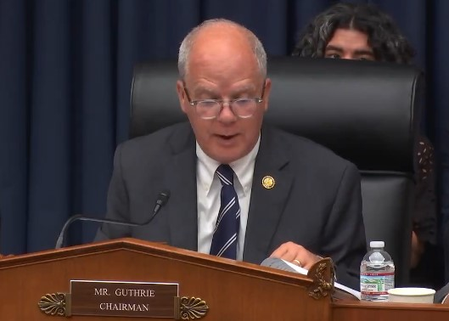
A bipartisan group of US lawmakers is advancing legislation to stop Chinese humanoid and quadruped robots from infiltrating America’s critical infrastructure. They fear that China’s tactics, previously successful in dominating the drone market, could lead to the exploitation of connected robots for espionage and sabotage. The proposed GUARD Act was the focus of a House Energy and Commerce Communications and Technology Subcommittee hearing, addressing concerns about communications security, artificial intelligence, broadband deployment, and illegal robocalls.
Lawmakers from both Republican and Democratic parties emphasized the urgency of acting before Chinese robotics become widely adopted in American industries. Committee Chairman Brett Guthrie highlighted previous actions taken against Chinese telecommunications equipment and drones, underscoring the need to protect critical infrastructure and American data from potential threats. Michael Robbins, President of the Association for Uncrewed Vehicle Systems International (AUVSI), urged swift action, pointing out that China’s industrial strategy in robotics mirrors its approach in drones.
Robbins warned that Chinese companies already dominate about 90 percent of global humanoid shipments and cautioned about the increasing reliance of American research institutions on subsidized Chinese systems. He stressed the risks posed by compromised robots, stating that they could not only expose data but also carry out physical actions within sensitive facilities. Former White House technology adviser Lindsay Gorman highlighted the cybersecurity implications of artificial intelligence, urging the US to develop cost-effective AI alternatives to compete with Chinese models globally.
Gorman emphasized the need for the US to bolster trusted supply chains with allies and cautioned against the spread of inexpensive Chinese AI models worldwide due to cost advantages. Robbins, during questioning, raised concerns about Chinese robots potentially sending data back to China and being capable of physical disruptions through software updates or remote access. He advocated for collaboration with allied nations to counter China’s influence effectively.
The hearing also addressed proposals to enhance communications networks using artificial intelligence, streamline federal broadband coordination, and combat illegal foreign robocalls linked to organized criminal networks operating abroad.
