


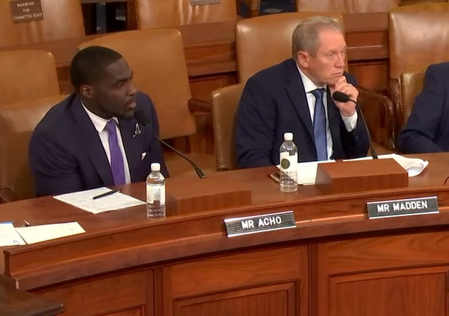
US lawmakers are advocating for reforms to assist college athletes in managing tax responsibilities amid the rise of Name, Image, and Likeness (NIL) deals. Concerns were raised during a House committee hearing regarding young athletes facing significant tax bills due to endorsement earnings. Former NFL player Sam Acho shared a story of an 18-year-old athlete who, after earning $750,000 through NIL agreements, was left with only $6,000 and a $320,000 tax bill.
Lawmakers were informed that college athletes, treated as self-employed contractors, are responsible for federal income, Social Security, and Medicare taxes without automatic withholding. This tax burden poses challenges for athletes, many of whom spend their earnings without setting aside money for taxes. Suggestions were made for mandatory withholding from NIL payments to enhance tax compliance and prevent athletes from accumulating tax debts.
Efforts to enhance financial literacy among college athletes were supported by lawmakers from both parties. It was highlighted that universities often prioritize athletic performance over educating players on financial matters. Witnesses emphasized the need for athletes to have advocates who can guide them through contracts, taxes, and financial planning. Additionally, proposals were made to enable athletes to establish retirement accounts from a portion of their NIL earnings.
The discussion also delved into the broader economic aspects of the sports industry, including taxpayer-funded stadiums and the tax treatment of professional sports franchises. Questions were raised about the economic benefits of public subsidies for stadium construction. Challenges faced by foreign students on F-1 visas due to immigration and tax rules were also highlighted, especially as universities increasingly rely on international talent in collegiate sports. The impact of these discussions extends beyond the US, particularly for Indian athletes studying in the country who may encounter similar tax and financial planning issues.
