


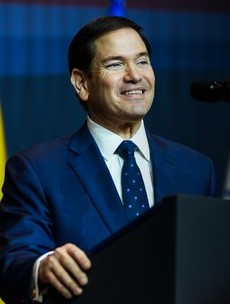
US Secretary of State Marco Rubio supported President Donald Trump’s ability to conduct military actions against Iran without needing approval from Congress. Rubio labeled the War Powers Act as entirely unconstitutional during a White House briefing. He emphasized that every presidential administration since the law’s inception has held this view. Rubio stated that while the White House would engage with Congress, the president still possessed the constitutional right to act militarily when required.
Rubio clarified that the administration had already accomplished the objectives of the military campaign known as “Operation Epic Fury,” which has now concluded. The focus has shifted to “Project Freedom,” an ongoing naval initiative to safeguard commercial shipping in the Strait of Hormuz. Despite escalating military pressure, Trump’s preference remains diplomacy with Iran. Rubio highlighted the complexities of negotiating with Iran due to its divided leadership and intricate power structure.
The Secretary of State elaborated on the broader Middle East strategy, mentioning US efforts concerning Lebanon, Israel, and Hezbollah. Rubio identified Hezbollah as the primary obstacle to achieving lasting peace between Israel and Lebanon, operating from within Lebanese territory. He accused Iran of backing various militant groups in the region, emphasizing Tehran’s involvement behind groups like Hamas and Hezbollah. Washington aims for a stronger Lebanese government capable of challenging Hezbollah’s military influence.
Rubio also discussed his upcoming trip to the Vatican and Italy, emphasizing the focus on humanitarian aid, religious freedom, and the persecution of Christians worldwide. He rejected claims linking the visit to tensions between Trump and Pope Leo, highlighting shared concerns with the Catholic Church regarding religious liberty. Rubio defended US humanitarian aid efforts towards Cuba, expressing willingness to provide more aid if the Cuban government allowed it. He reiterated the administration’s foreign policy as a defense of international order and US strategic interests, particularly in countering threats posed by the Iranian regime.
