


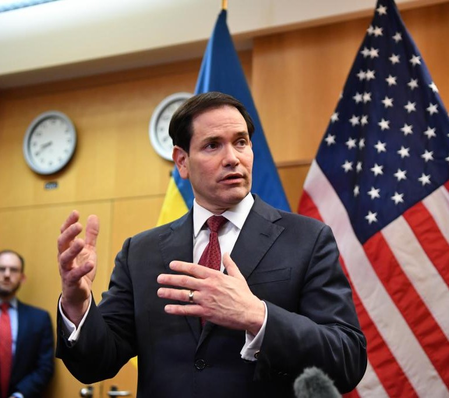
US Secretary of State Marco Rubio stated that the reconstruction of Gaza hinges on the demilitarization of Hamas. Rubio highlighted that without Hamas giving up its military capabilities, governments and investors are unlikely to commit funds for the territory’s rebuilding. He defended the Trump administration’s Gaza strategy during a Congressional hearing, countering criticisms from Democratic lawmakers questioning progress on peace and reconstruction efforts.
International discussions are ongoing regarding Gaza’s future, with a focus on securing financial support for reconstruction and establishing a new governing structure for the region. Rubio mentioned that while donor countries and private investors are interested in Gaza’s recovery, security concerns, primarily linked to Hamas’ militarization, pose a significant barrier to investment. He emphasized that as long as Hamas remains armed, the prospect of future conflicts deters potential investors.
Rubio’s remarks came in response to Representative Rosa DeLauro’s inquiries about the broader US-backed peace initiative and the deteriorating humanitarian situation in Gaza. Rubio refuted claims that Washington had abandoned efforts to address the crisis, outlining a vision that envisions Gaza under a non-Hamas Palestinian administration supported by international allies. Discussions are centered on creating conditions for an international stabilization force to enter Gaza, ensuring security while long-term political and economic solutions are devised.
The Secretary highlighted that various regional countries are also urging Hamas to embrace demilitarization as part of a comprehensive settlement. Rubio clarified that proposals attributed to Israeli Prime Minister Benjamin Netanyahu regarding Gaza’s control are not aligned with the current US plan. He also defended the US’s humanitarian aid efforts in Gaza, noting substantial financial commitments already made towards relief initiatives in the region.
The future of Gaza remains a critical issue in Middle East diplomacy, with a focus on establishing a political framework that prevents conflict recurrence while facilitating the reconstruction of essential infrastructure and services damaged over years of conflict.
