


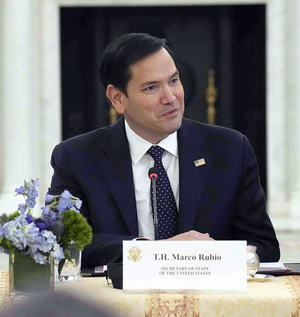
US Secretary of State Marco Rubio addressed lawmakers, detailing the Trump Administration’s approach towards Venezuela. Rubio emphasized a phased strategy focusing on immediate stabilization, economic recovery, and a transition to democracy. He acknowledged the complexity of the process, highlighting the need for time to achieve the desired outcomes.
Rubio expressed concerns about Venezuela’s current state under Nicolas Maduro, stating that it poses a direct risk to US security interests. He identified Venezuela as a hub for various global competitors and adversaries like Iran, Russia, and China, emphasizing the strategic importance of addressing the situation in the Western Hemisphere.
In the event of Maduro’s removal, Rubio highlighted the importance of preventing disorder and civil unrest in Venezuela. He outlined a temporary mechanism allowing the sale of sanctioned Venezuelan oil at market prices under US oversight to fund essential government functions and stabilize the country. Rubio stressed that this arrangement is a short-term measure to prevent fiscal collapse.
During the recovery phase, Rubio pointed out early economic and political reforms initiated by interim authorities in Venezuela. He mentioned the enactment of a new hydrocarbon law aimed at attracting private investment and the release of political detainees. Rubio underscored the administration’s focus on actions rather than words to assess progress in Venezuela’s transition.
Rubio reassured that the US does not anticipate further military involvement in Venezuela beyond diplomatic engagement. He mentioned plans to restore a diplomatic presence in Caracas to engage with authorities, civil society, and opposition figures. Rubio emphasized the importance of observing actions to evaluate the country’s shift towards a more open political and economic system.
