


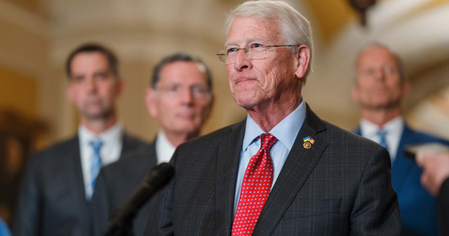
US senators have raised concerns about China’s increasing political, economic, and security presence in South America. They highlighted China’s use of infrastructure control, strategic investments, and diplomatic pressure to undermine US interests and weaken Taiwan’s international standing. Senate Armed Services Committee chairman Roger Wicker emphasized that China’s activities in the region extend beyond trade, posing threats to US interests by controlling critical infrastructure and telecommunications systems.
Wicker accused Beijing of deepening economic dependence in South America by making large-scale purchases of strategic materials like copper, oil, and lithium. He noted that China has influenced countries in the region to switch diplomatic recognition from Taiwan to the People’s Republic of China, directly challenging Taiwan’s international position. The senators’ remarks were made during a review of Lieutenant General Francis Donovan’s nomination to lead US Southern Command, responsible for military operations in South America and the Caribbean.
In addition to economic tactics, China has expanded its presence in South America through defense cooperation, including arms sales, police training, and space and cyber partnerships. Wicker highlighted that China’s collaboration with Russia and Iran in the region poses challenges to US commercial, political, and security interests. The three countries are accused of exploiting corruption and partnering with authoritarian regimes to gain leverage close to US territory.
Russia has strengthened security ties with regimes in Venezuela, Nicaragua, and Cuba, selling arms, providing military advisers, and increasing intelligence operations. Wicker pointed out that Moscow has utilized local corruption to evade US sanctions and sustain its activities against Ukraine. Iran, on the other hand, has been alleged to use Hezbollah-linked networks in South America for fundraising, money laundering, and illicit trafficking, supporting its global terrorism operations.
Ranking Member Jack Reed expressed concerns about China and Russia’s influence in strategic locations in the region, questioning whether US Southern Command is adequately equipped to counter near-peer competitors. Lieutenant General Francis Donovan, if confirmed, pledged to scrutinize China’s and Russia’s activities in South America, emphasizing the need to counter their influence effectively. He highlighted China’s strategic investments in key communication lines like ports, airfields, and transportation infrastructure, which could be leveraged during conflicts.
Senators emphasized that China’s expanding role in South America goes beyond economics and supports broader strategic competition with the United States. They underscored the importance of countering China’s influence through a combination of military, economic, and diplomatic measures. The bipartisan concern raised during the hearing highlighted the significant impact of China’s actions in reshaping alliances, weakening Taiwan diplomatically, and posing long-term strategic challenges for the United States.
