


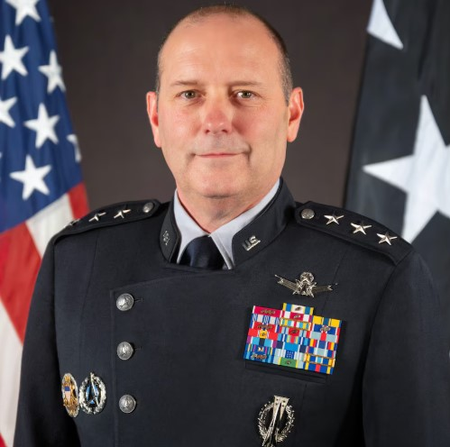
President Donald Trump’s nominee for leading the US Space Force cautioned lawmakers about China’s swift advancements in space warfare capabilities. Lieutenant General Douglas Schiess, during his confirmation hearing, emphasized the urgent need for the US to bolster its military edge in space. He highlighted China’s rapid progress in developing systems that could jeopardize American satellites and forces.
Schiess informed senators about China’s significant strides in counter space and space superiority capabilities, posing a tangible threat to US assets in space. China’s actions include anti-satellite tests, the development of systems that endanger US satellites, and the expansion of electronic warfare capabilities to disrupt American space assets. He stressed the necessity for the Space Force to enhance its capabilities to safeguard against these threats.
Committee Chairman Senator Roger Wicker underscored that space was no longer a permissive environment, with both China and Russia investing heavily in weapons aimed at disrupting US military operations. He emphasized the importance of the Space Force’s growth to match the evolving threats posed by adversaries. Ranking Member Senator Jack Reed highlighted the shift of space from a support domain to a warfighting domain, calling for enhanced preparedness and cooperation with the Air Force.
Schiess acknowledged the critical role of closer integration with the Air Force and other military branches, particularly in electronic warfare. He also emphasized the significance of artificial intelligence in enhancing space domain awareness while emphasizing the need for human oversight. Defending the proposed Space Force budget of $71.1 billion, Schiess justified the funding increase as necessary to address the escalating challenges from China and Russia.
