


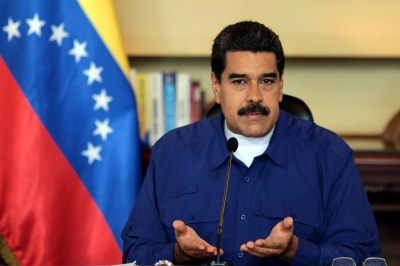
The recent US strike in Venezuela, coinciding with the capture of President Nicolás Maduro, is seen as a significant blow to China’s expanding presence in Latin America. Reports suggest that the US military action followed a meeting between Maduro and a special Chinese delegation, raising questions about the timing. This move is interpreted as a clear signal from the US to China to limit its involvement in the Western Hemisphere, an area Washington views as its sphere of influence.
The US has been vocal about its concerns regarding the deepening connections between Latin America and Beijing. Secretary of State Marco Rubio has emphasized the need to restrict investments from US adversaries, particularly China, in Venezuela’s oil sector. China, a major importer of Venezuelan oil, plays a crucial role in the country’s export market, accounting for up to 80% of its oil sales.
China’s economic footprint in Latin America extends beyond Venezuela, with the Asian nation surpassing the US as the primary trading partner in countries like Brazil, Chile, and Peru. Additionally, China has made substantial investments in key infrastructure projects in the region, including ports in Peru and a space-tracking station in Bolivia. The Chinese government’s policy paper on Latin America and the Caribbean underscores a shifting global power dynamic, indicating a growing competition with the US for influence in the region.
