


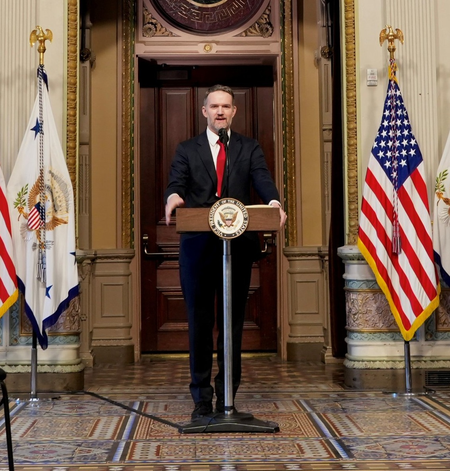
US Trade Representative Jamieson Greer announced that the Trump administration will unveil the outcomes of trade investigations involving countries like South Korea, China, and Japan in the coming weeks. These investigations, conducted under Section 301 of the 1974 Trade Act, aim to uncover unfair trade practices related to excess capacity, production structures, and potential import bans on goods made with forced labor. The results could lead to the imposition of new tariffs or other trade actions, as reported by Yonhap news agency.
Greer mentioned in a CNBC interview that investigations are ongoing into specific unfair trading practices by over 70 countries. The forthcoming reports will detail findings of unfair practices such as structural excess capacity and forced labor. If such practices are identified, proposals for corrective actions, including potential tariffs, will be put forward.
The Trade Representative emphasized that the investigation outcomes cannot be predicted in advance. However, he highlighted the prevalence of persistent unfair trade practices globally. The administration’s objective is to apply tariffs to encourage the return of manufacturing to the US and protect American industries. Greer stressed the need for substantial tariffs to address the significant trade deficit and the trend of offshoring.
The US has been conducting these trade investigations to replace reciprocal tariffs that were invalidated by the Supreme Court in February. Section 301 empowers the USTR to probe unfair trade practices on a country-specific basis. Before the court ruling, South Korean products faced a 15 percent reciprocal tariff under a bilateral trade agreement with the US. Greer also referenced South Korea’s emergence as a major steel producer in a recent article supporting President Trump’s tariff strategy and criticizing foreign government interference.
