


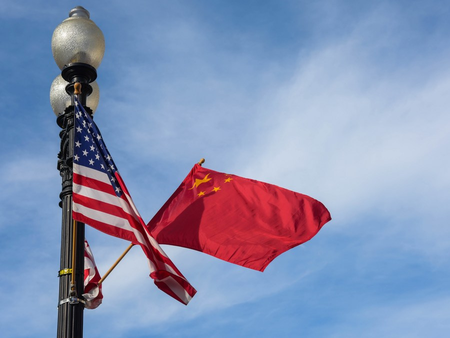
The United States is advised to swiftly implement a national strategy focusing on nuclear energy, artificial intelligence (AI), and autonomous systems to compete with China in advanced military technologies. According to aerospace and defense executive Vivek Lall, China has made significant progress in what he terms a “tech triad” comprising nuclear energy, AI, and autonomous systems, surpassing the US in integrating these technologies. China’s approach of linking these technologies rapidly contrasts with the US, which is just beginning to grasp their interconnectedness.
Lall highlights China’s strategic emphasis on nuclear energy, AI, and autonomous systems as crucial components of future military strength. He points out that China’s investment in nuclear reactors, with plans for additional plants, is aimed at powering energy-intensive AI applications for military use, such as autonomous technologies and AI-driven simulations. In comparison, the US lacks a cohesive approach, with no large-scale nuclear reactors under construction, despite leading in private AI development globally.
The commentary underscores the importance of a unified national effort to propel advancements in AI, quantum computing, and autonomous systems, as outlined in President Donald Trump’s National Security Strategy. Lall calls for the immediate implementation of a National Integration Initiative by the Department of War and the Department of Energy to address regulatory hurdles, enhance collaboration with allies, and support impactful demonstration projects while leveraging private sector capabilities.
