


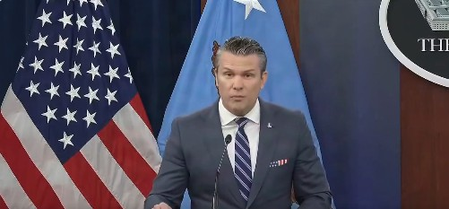
The US has called on its allies to play a more active role in safeguarding critical maritime routes in the Gulf, emphasizing the need for shared responsibility amidst rising tensions with Iran. Defence Secretary Pete Hegseth highlighted that while some regional partners have supported US initiatives, many countries have not taken necessary actions during crucial moments. Hegseth, speaking at a Pentagon briefing alongside military officials, stressed the importance of broader international participation in securing global waterways, especially by nations heavily reliant on energy shipments in the region.
The US has been enforcing a naval blockade targeting Iran’s ports and coastline as part of efforts to increase pressure on Tehran following recent military operations. Hegseth pointed out that while the US itself does not heavily depend on energy flows through the Strait of Hormuz, other regions such as Asia and Europe, along with various parts of the world, heavily rely on this vital waterway. He underscored the significance of countries benefiting from the stability of the route contributing to its security, highlighting the need for collective defense efforts.
US military forces continue to maintain a robust presence in the Middle East, with naval, air, and intelligence assets supporting the blockade and broader operations. Military officials affirmed readiness to escalate if required, with the capability to swiftly resume major combat operations. Admiral Cooper emphasized the high level of preparedness among US troops deployed in the region during the ceasefire period, noting cooperation with regional partners like Gulf states and Israel in joint operations and defense endeavors.
Despite the support from some regional allies, Hegseth expressed concerns over limited international participation in maritime security, particularly from countries beyond the immediate vicinity. While welcoming the prospect of greater involvement in the future, he acknowledged the need for self-reliance during critical junctures, emphasizing the importance of proactive contributions to maritime security. The Strait of Hormuz, a crucial energy corridor, remains vital for global oil shipments, with disruptions in the area having swift repercussions on supply chains and fuel prices worldwide.
