


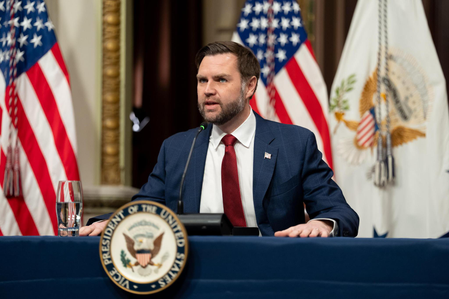
US Vice President JD Vance mentioned that negotiations with Iran have seen significant progress but have not resulted in a final agreement. Vance emphasized that key demands from Washington, such as the removal of enriched uranium and verifiable restrictions on Iran’s nuclear program, remain unchanged. He noted that the recent talks in Pakistan helped clarify areas of flexibility and US “red lines.”
Vance stressed the importance of Iran never possessing a nuclear weapon, a fundamental principle guiding US negotiation stances. He outlined two essential requirements: the removal of enriched material from Iran, particularly uranium stockpiles, and a firm commitment to refrain from developing nuclear weapons, supported by verification measures.
While acknowledging some movement from Iranian negotiators towards US positions, Vance indicated that Iran had not gone far enough, leading to a pause in talks for both sides to consult with their respective governments. He emphasized that the next steps in negotiations depend on Iran’s willingness to meet US conditions.
The Vice President also connected the progress in discussions to broader regional concerns, including the full reopening of the critical global energy route, the Strait of Hormuz. Vance highlighted the need for the strait to be fully accessible and criticized Iran for attempting to alter terms during negotiations, warning that failure to restore complete access could significantly impact the talks.
Vance confirmed that US naval operations target not only Iranian-flagged ships but also vessels associated with Iranian ports, citing intelligence capabilities to monitor such activities. He accused Iran of engaging in “economic terrorism” by threatening shipping in the strait and emphasized that the US would prevent Iranian ships from operating if such actions continued.
Despite existing tensions, Vance expressed optimism for a comprehensive agreement, stating that the US President desires normalcy for Iran but under conditions that exclude nuclear weapon pursuits and terrorism. He acknowledged that Iranian negotiators might need approval from higher authorities in Tehran before finalizing a deal, underscoring US leverage in the talks through military and economic pressure.
