


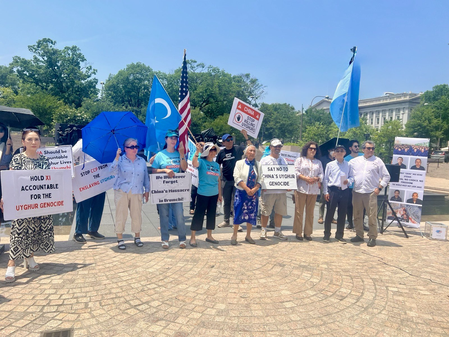
Over 50 Uyghur civil society organizations have strongly criticized Beijing’s Ethnic Unity Law, urging global intervention to revoke the legislation. The law, effective since July 1, 2026, is viewed as a tool for forced assimilation rather than a mere administrative measure. It requires ethnic groups to prioritize loyalty to the Chinese Communist Party (CCP) over their distinct identities.
The law promotes Mandarin as the primary language in education, pushing aside Uyghur, Tibetan, and Mongolian languages. It also emphasizes the ‘sinicisation’ of religion, placing Party ideology above faith. Parents and teachers are instructed to instill loyalty to the CCP instead of cultural, religious, or linguistic heritage, according to the joint statement by the organizations.
Expressing concerns, the groups highlighted provisions allowing legal action under Chinese law against individuals and entities outside mainland China who are perceived to undermine ethnic unity and progress. This move is seen as an attempt to extend Beijing’s control beyond its borders, potentially impacting diaspora communities and challenging state sovereignty.
The organizations have called on UN human rights experts to monitor the implementation and extraterritorial reach of the Ethnic Unity Law. They urge governments worldwide to denounce the law publicly, address the issue in discussions with Beijing, and establish protections against its extraterritorial enforcement for Uyghur, Tibetan, Mongolian, and other diaspora communities.
