


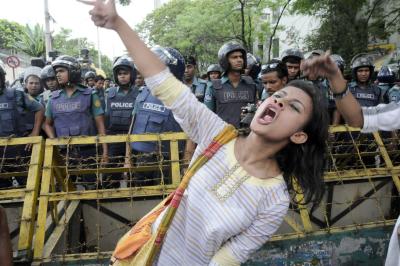
Violence against women and children in Bangladesh is escalating, with 5,448 cases registered under the Women and Children Repression Prevention Act between March and May, as per police headquarters data. In Dhaka metropolitan areas, out of 413 cases, charge sheets were filed in only 65 cases within three months, while 10 cases were closed after investigations found no involvement of the accused.
The data also revealed that 178 rape cases were reported across 50 police stations under Dhaka Metropolitan Police (DMP) during this period, with 115 victims being women and 63 being children. Many rape and murder cases remain stagnant at the investigation stage for months, sometimes even years, despite the law requiring investigations to be completed within 15 working days.
Experts in crime mention that investigations are hastened when rape incidents gain widespread media coverage or attract the attention of human rights organizations. Cases that do not receive public attention often lag in progress. The Awami League in Bangladesh expressed serious concerns about women’s safety, citing reports of harassment and violence in various settings, from public transport to workplaces and streets.
The party highlighted a worrying trend, suggesting that women face increased risks of abuse, intimidation, and violence when the Bangladesh Nationalist Party (BNP) is in power. The safety of women and girls is emphasized as a fundamental responsibility of the state, with every woman deserving security, dignity, and justice, irrespective of political affiliations.
Independent lawmaker Rumeen Farhana raised alarms about the deteriorating law and order situation in Bangladesh, with Transparency International Bangladesh (TIB) reporting a surge in murder, abduction, and violence against women during the initial 100 days of the Bangladesh Nationalist Party (BNP) government. Noting 3,496 cases of abuse, including various forms of rape, she highlighted the concerning state of law and order in the country.
