


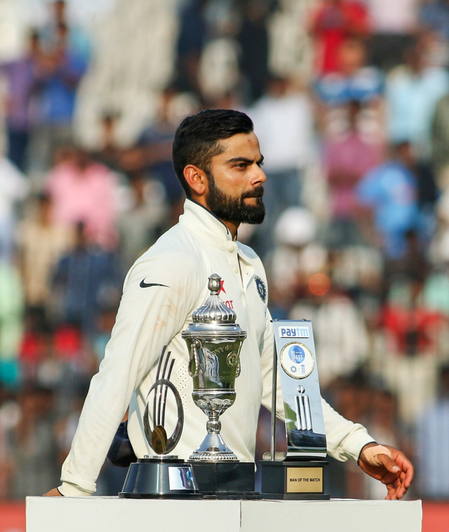
Virat Kohli, in a Royal Challengers Bengaluru podcast, fondly recalls his time as India’s Test captain, labeling it a ‘golden era’ where camaraderie and shared responsibility fostered team success. Kohli highlights the strong bond among players, emphasizing the seamless interaction between seniors and juniors due to their similar ages, creating a friendly and cohesive team environment. Notable players like Cheteshwar Pujara, Ajinkya Rahane, Ravichandran Ashwin, Ishant Sharma, Mohammed Shami, and Ravindra Jadeja, all in their twenties at the time, contributed to this unity, enabling open communication and collective progress.
Kohli underscores the inclusive leadership approach within the squad, where responsibilities were distributed across the team rather than centralized with the captain or support staff. Every player felt accountable for shaping the team’s future over the long term, fostering a culture of continuous self-improvement and high standards. This shared sense of duty motivated players to elevate their performance consistently, propelling India to the forefront as one of the premier Test teams globally.
During his tenure as Test captain from 2014 onwards, succeeding MS Dhoni, Kohli steered India to significant victories abroad, notably clinching a historic Test series triumph in Australia during 2018-19. His captaincy oversaw a remarkable overseas record, securing seven Test wins in SENA countries, a feat unparalleled by any Asian captain. Kohli’s leadership also witnessed the emergence of a potent fast-bowling unit spearheaded by Mohammed Shami and Ishant Sharma, pivotal to India’s success in foreign conditions. Retiring from Test cricket in 2025, Kohli amassed 9,230 runs at an average of 46.85, with 30 centuries, solidifying his legacy as India’s fourth-highest run-scorer in Tests.
