


West Bengal Chief Minister Suvendu Adhikari’s recent meetings with Prime Minister Narendra Modi, Home Minister Amit Shah, and Defence Minister Rajnath Singh in New Delhi hold political and strategic significance. The state’s Cabinet expansion, with only five ministers currently, is a key political agenda. Additionally, the focus is on addressing administrative matters and strategic concerns.
The government’s attention is particularly drawn to the porous Bangladesh border and the crucial Siliguri Corridor in north Bengal. The state’s shift towards a BJP-led government after winning 207 seats in the Assembly election has strengthened ties with New Delhi’s national security priorities. The presence of top Union government officials at Adhikari’s swearing-in ceremony further highlights this support.
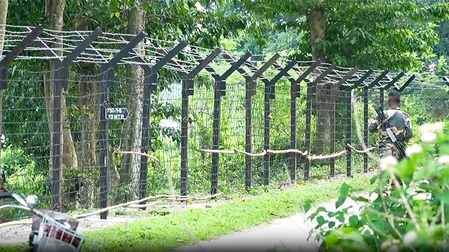
West Bengal shares a lengthy border with Bangladesh, known for infiltration, smuggling, and illegal migration. The transfer of land to the Border Security Force (BSF) for border fencing, a long-pending issue, has now been approved by Adhikari’s Cabinet. This move aims to enhance border security and combat cross-border crimes effectively.
The Siliguri Corridor, often referred to as the ‘Chicken’s Neck,’ is a vital link connecting mainland India to the northeastern states. Any disruption in this region could severely impact connectivity to the Northeast. China’s interest in this area, including attempts through projects in Nepal and Bangladesh, poses strategic challenges. The recent focus on the Teesta water management initiative and increased activity near the corridor indicate Beijing’s efforts to exert influence in the region.
