


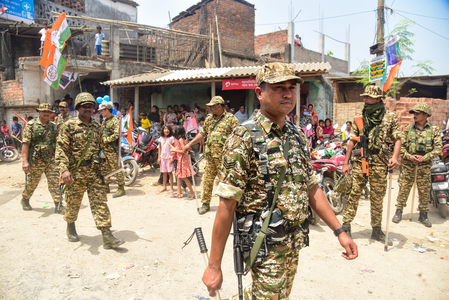
West Bengal’s Governor recently expressed concerns about the growing threats of radicalisation and militancy in the state, particularly in districts bordering Bangladesh like Murshidabad and Malda. Intelligence agencies have long raised alarms about these issues due to high levels of illegal immigration, leading to demographic shifts and land encroachments. Illegal immigrants in these areas are reportedly involved in activities such as cattle smuggling, narcotics trade, and counterfeit currency circulation. Efforts are underway to expand criminal networks and foster terror modules, alongside the proliferation of illegal madrasas serving as safe havens.
The agencies have noted the involvement of groups like the Rohingya Solidarity Organisation and Arakan Rohingya Salvation Army, as well as the Ansarullah Bangla Team, in these operations. The ultimate goal appears to be destabilizing security and disrupting India-Bangladesh relations. The ISI is allegedly orchestrating these activities to create unrest not only in West Bengal but also in northeastern states like Assam. The broader strategy includes causing trouble in various Indian regions, including Jammu and Kashmir, Delhi, Punjab, and the northeastern states, with a focus on using the modules in Murshidabad and Malda for larger-scale operations in the Northeast.
The heightened activities in these border districts are seen as part of a larger plan to disturb peace and security in the region. The official emphasized the need to address these challenges comprehensively, as instability in states sharing international borders poses significant risks to national security.
