


European and other Western leaders are shifting towards engagement with Beijing, marking a significant change in foreign policy trends. The previous emphasis on “decoupling” and “de-risking” from China is giving way to an acknowledgment that engagement is becoming inevitable. A recent report notes that China seems to have benefited from the US’s past approach, prompting countries worldwide to reassess their strategies amidst an unpredictable US stance.
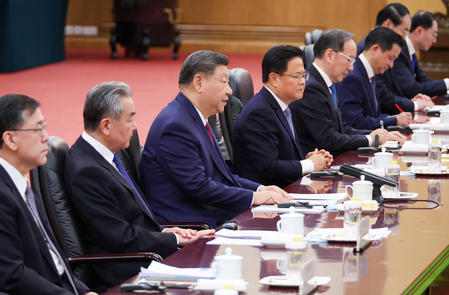
Many nations are now reorienting their foreign policy priorities, leaning towards China as an alternative economic partner. Notably, China is hosting Western leaders, albeit not with grand gestures like a red carpet but on its own terms. In January, leaders from Ireland, Finland, and the UK visited China, highlighting a broader trend where economic and diplomatic engagement is taking precedence over ideological stances.
While this shift does not signify a formal overhaul of Europe’s China policy, it reflects a pragmatic response to evolving global dynamics. European leaders are increasingly valuing economic expediency over strategic caution and normative concerns. The report underscores that as relations with the US become more uncertain, maintaining workable ties with Beijing is seen as crucial, almost regardless of the costs involved.
European countries are facing a perceived binary choice between China and the US, although this perspective is considered flawed. The report emphasizes that the challenge posed by China differs from the dynamics with Washington, yet European leaders are often framing their approach to Beijing solely within the context of US-China competition. This narrow focus risks overlooking the potential downsides of deepening engagement with China, despite the consistency in China’s behavior compared to the shifting US policies.
