


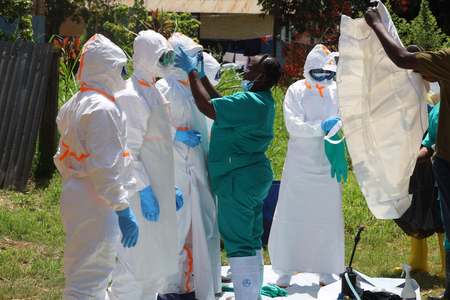
The Ebola outbreak in the Democratic Republic of the Congo (DRC) is described as “very complex” by World Health Organization (WHO) Director-General Tedros Adhanom Ghebreyesus. He mentioned that conflict, insecurity, displacement, food shortages, and community mistrust are complicating efforts to control the disease. Tedros emphasized the need for support in affected areas and stressed the importance of addressing conflict and insecurity, which are major obstacles in responding to the outbreak.
WHO teams are actively working in Bunia, the capital of the eastern Ituri province, with Tedros planning to visit the area to assess the situation firsthand. He highlighted that conflict and insecurity are key factors hindering the response and called for a ceasefire in areas affected by armed attacks. Tedros also addressed concerns about travel restrictions imposed by some countries on travelers from the DRC, stating that WHO does not recommend travel bans as they may only temporarily delay the spread of the virus.
Tedros emphasized the significance of intensifying measures at the source and providing support rather than implementing travel bans. He warned that travel restrictions could have adverse public health effects and may discourage countries from transparently reporting outbreaks. The latest situation report from the country’s Ministry of Health indicates over 1,000 suspected cases and 238 suspected deaths in the ongoing outbreak across the DR Congo’s eastern provinces.
This marks the 17th Ebola epidemic in the country, with laboratory tests confirming the presence of the Bundibugyo strain of the virus, a relatively uncommon form of Ebola. The WHO declared the outbreak a public health emergency of international concern on May 17, while the Africa Centers for Disease Control and Prevention also declared a continental public health security emergency in response to the situation.
