


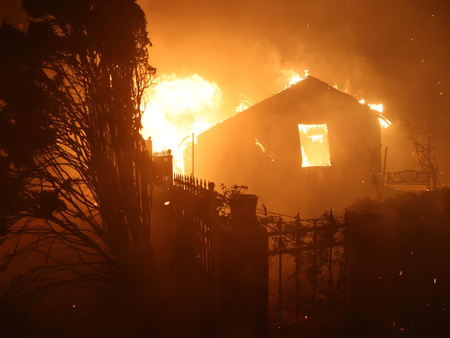
Wildfires are raging through the southeastern United States, causing widespread evacuations and destroying numerous homes, especially in Georgia and Florida. Dry conditions, strong winds, and dense vegetation have fueled the rapid spread of the fires, catching many residents by surprise. In Georgia, areas near the coast have been hit the hardest, with almost 50 homes already lost and around 1,000 more at risk.
The fires in Georgia have burned over 30 square miles (around 80 square km) in two major blazes, alongside smaller fires reported in the region. Severe drought conditions, with significantly low rainfall levels, have exacerbated the situation, leading to the state’s first-ever burn ban in affected areas. Emergency teams are working to contain the flames by creating firebreaks, but the challenge persists due to shifting winds.
Florida is facing one of its worst wildfire seasons in decades, with more than 100 active fires burning throughout the state. Smoke from these fires has drifted into major cities, impacting air quality and raising health concerns. The National Interagency Fire Centre in Idaho reported light fire activity across the country, with 144 new fires and three large incidents. Currently, 23 large fires remain uncontained, with nearly 1,000 personnel assigned nationwide.
Authorities are managing all incidents under a full suppression strategy, focusing primarily on the Southern Area. A new Fuels and Fire Behaviour Advisory has been issued for the Southeastern Area due to persistent dry weather and escalating drought conditions, resulting in historically dry fuels in the region. Evacuations have been ordered, and residents are being advised to stay vigilant as conditions evolve.
